|
Alaska Blind Child Discovery
|
A
cooperative research project to eliminate amblyopia in Alaska |
| |
Which Photoscreener is for You?
|
|
|
|
 Comparison Comparison |
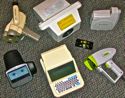
Early objective vision screening can reduce amblyopia blindness. The photoscreening CPT codes, 99174 and 99177 are recognized by many insurers so pediatric care-givers should consider which Photoscreener is Ideal for their program. A few vendors have objective pediatric vision screeners commercially available. ABCD has published updated vision screen FAVORITES. Video Demonstration. TABLE of current 2023 Devices and references. |
|
|
|
|
|
|
|
|
|
|
|
|
|
|
|
|
|
|
|
 Video Demonstration Video Demonstration |
PlusoptiX: German made and extensively validated, infrared, multiplanar, with immediate computer interpretation by user-selected, age-dependent referral criteria. Handheld, portable camera model S-20 is an excellent screening while the A-20 is designed for eye office use. These replace the s-16 and S-12 and before that required cable to computer (S09 with Linux), separate monitor and printer/labels. Sound directed fixation and focal distance. Quick. Precise. Excellent ability for user to select instrument referral criteria (IRC)either specific (ABCD preference) or sensitive (more false positives). Purchase or Lease options. |
|
|
|
|
|
|
GoCheckKids: iPhone app developed by Gobiquity to override the automatic redeye redux preflash and acquire orthogonal images for interpretation. Onsite (99177) and centralized expert (99174) interpretation. Similar PPV to infrared photoscreeners with Nokia 1020 version. 2019 iPhone 7+ with two-axis and flash concentrating case. |
|
|
|
|
|
|
2WIN: Made in Italy, this remote autorefractor has modifiable referral criteria allowing it to work as a photoscreener. Refractive accuracy rivals Retinomax. External case called Kaleidos works in bright, noisy, distracting environments. Helpful for Drive-By Photoscreening. |
|
|
|
Rebiscan blinq: developed by Drs David Hunter and David Guyton. Hand-held featuring foveal birefringence to detect ocular alignment. Released 11/2019 commercially available named blinq. Twitter. ABCD validation: |
|
|
|
iScreen: hand-held camera with simple screen and keyboard. This battery powered, portable unit evolved from the validated, table-top unit retaining excellent fixation mechanism. Fast! Internet image transfer with Memphis experienced Reading Center. Lease with per-image fee. |
|
|
|
SPOT now by Baxter after Welch Allyn and originally copied from PlusoptiX by Pediavision. Portable, infrared photoscreener with internal interpretation and attached monitor. Validation faster than Plusoptix with compromised precision. Lacks 2021 AAPOS IRC adjustment. Lease option. |
|
|
|
Retinomax: this is a proximal (less than 5 cm) hand-held autorefractor, with keratometry option, that attempts to relax accommodation with internal camera image. Validated in VIPS and used in MEPEDS and BPEDS NIH large-scare studies. Expensive and not as useful for children less than 3-4 years old. |
|
|
|
Cell V100 and another SW-800 (Digital Eye) Chinese multi-axial infrared photoscreeners launched 2018-19. Also HVS002. Also:ABCD-validated AI Optics |
|
|
|
ADBC: commercial, digital flash cameras with close flash-to-lens distance- small, quick, quirky to focus at times, needs red-eye redux override, needs local interpretation such as DCC. Relatively inexpensive. iPhone option. Few still available on E-Bay. Gateway DV-S20 and Canon TX1. |
|
|
out-of-date --> |
MTI: no longer commercially available camera and Polaroid film (can use Fuji FP-300B with revamped old MTI) with extensive validation but requiring experienced image reading to achieve desired validity. |
|
|
out-of-date --> |
EyeDx: original computer-interpreted, digital cameral photoscreener- by David Granet- no longer available. |
|
|
out-of-date --> |
Welch Allyn Suresight: This former tool was a remote autorefractor using [photo] light beyond visible spectrum and wave-front analysis. Monocular screen with sound-directed focal distance. Sturdy and fairly simple to aim with few buttons. Internally validated by VIPS with less robust predictive value in subsequent comparisons with MTI community screening, therefore more false positives. |
|
|
|
|
|
 |
|
|
|
|
|
|